


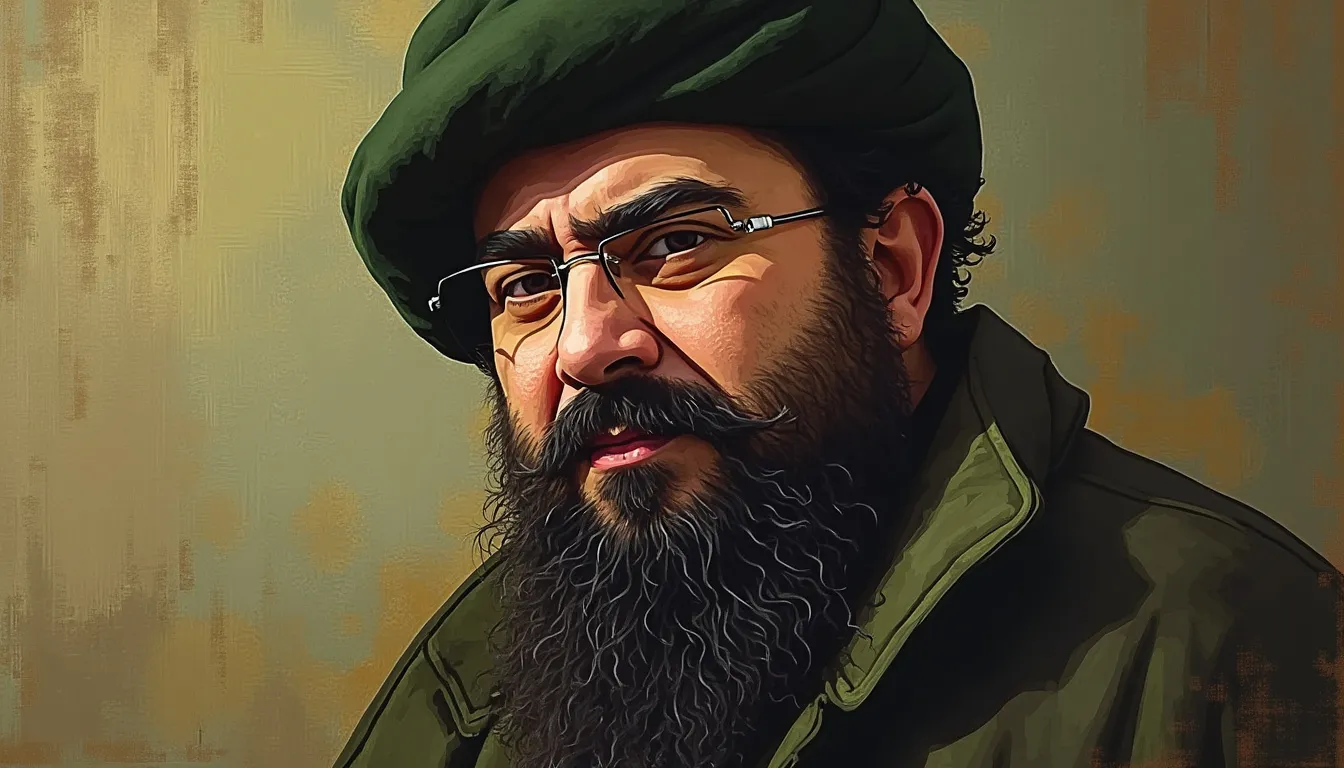
They Captured Him: Israel Confirms the Elimination of Hezbollah Leader Hassan Nasrallah in Secret Headquarters
The Israel Defense Forces (IDF) have confirmed the death of Hezbollah leader Hassan Nasrallah in a precision airstrike on his organization’s central headquarters, located in the southern suburbs of Beirut. This operation marks a significant escalation in the ongoing conflict between Israel and Hezbollah, highlighting Israel’s commitment to neutralizing perceived threats to its national security.
Confirmation of Hassan Nasrallah’s Death
In a statement, the IDF confirmed that the airstrike successfully targeted Nasrallah, who had been a prominent figure in Hezbollah for over three decades. His leadership has been marked by a series of orchestrated attacks against Israeli interests both domestically and worldwide, as well as his support for Syrian President Bashar Al-Assad during the Syrian civil war.
Details of the Airstrike
The operation specifically targeted Hezbollah’s underground headquarters, which were situated beneath a residential building—a common tactic employed by Hezbollah to shield its activities from Israeli strikes. This strategic location underscored the ongoing complexities of engagement in urban warfare where civilians may be present.
Other Casualties
The airstrike also resulted in the death of Ali Karaki, Hezbollah’s Southern Front commander, along with several other senior leaders of the group. These losses represent a severe blow to Hezbollah’s operational capabilities and leadership structure.
Hezbollah’s Response
As of the latest reports, Hezbollah has neither confirmed nor denied the deaths of Nasrallah and Karaki, leaving many to speculate about the implications of their potential loss on the group’s strategic operations.
IDF Statement
Lt. Col. Nadav Shoshani, the IDF’s international spokesman, elaborated on the operation, asserting that the strike was conducted while Hezbollah’s upper echelon was in the headquarters, actively engaging in planning terrorist activities against Israeli citizens. He described Nasrallah as a significant threat with the blood of thousands on his hands, indicating the IDF’s justification for the targeted action.
Broader Context
Under Nasrallah’s command, Hezbollah has instigated multiple attacks against Israel and fortified its presence in the region. His lengthy tenure has reshaped not only the dynamics of Israeli-Hezbollah relations but also the broader geopolitical landscape in the Middle East.
Ongoing Military Operations
The recent airstrike is part of a larger campaign by Israel, which has seen a renewed wave of military action in Beirut’s southern suburbs and other regions of Lebanon. Since the escalation of hostilities on October 8, when Hezbollah began bombarding northern Israel, the IDF has intensified its targeting of the group’s leadership and weapon depots.
Political Stance
Israeli Prime Minister Benjamin Netanyahu has publicly rejected a ceasefire proposal backed by the United States and France, reiterating his commitment to pursuing hostilities until Israel’s objectives are met, particularly concerning the safety of northern residents.
Evacuations and Casualties
In the wake of escalating violence, approximately 60,000 residents from Israel’s Lebanon border region have been evacuated. Recent Israeli airstrikes have led to significant casualties reported in Lebanon, compounding the humanitarian crisis in the region.
IDF Chief of Staff’s Statement
Emphasizing Israel’s stance on national security, IDF Chief of Staff Lt. Gen. Herzi Halevi stated, The message is clear: anyone who threatens Israeli citizens will be targeted by the IDF. This declaration showcases the IDF’s resolve to continue its campaign against Hezbollah and any threats originating from the group.
As tensions remain high, the international community closely watches these developments, which could have far-reaching ramifications not only for Israel and Hezbollah but for regional stability as a whole.

 Español de Venezuela
  English